

Our 2026 Growing Season
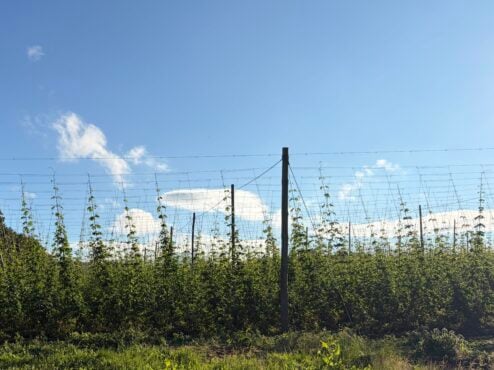
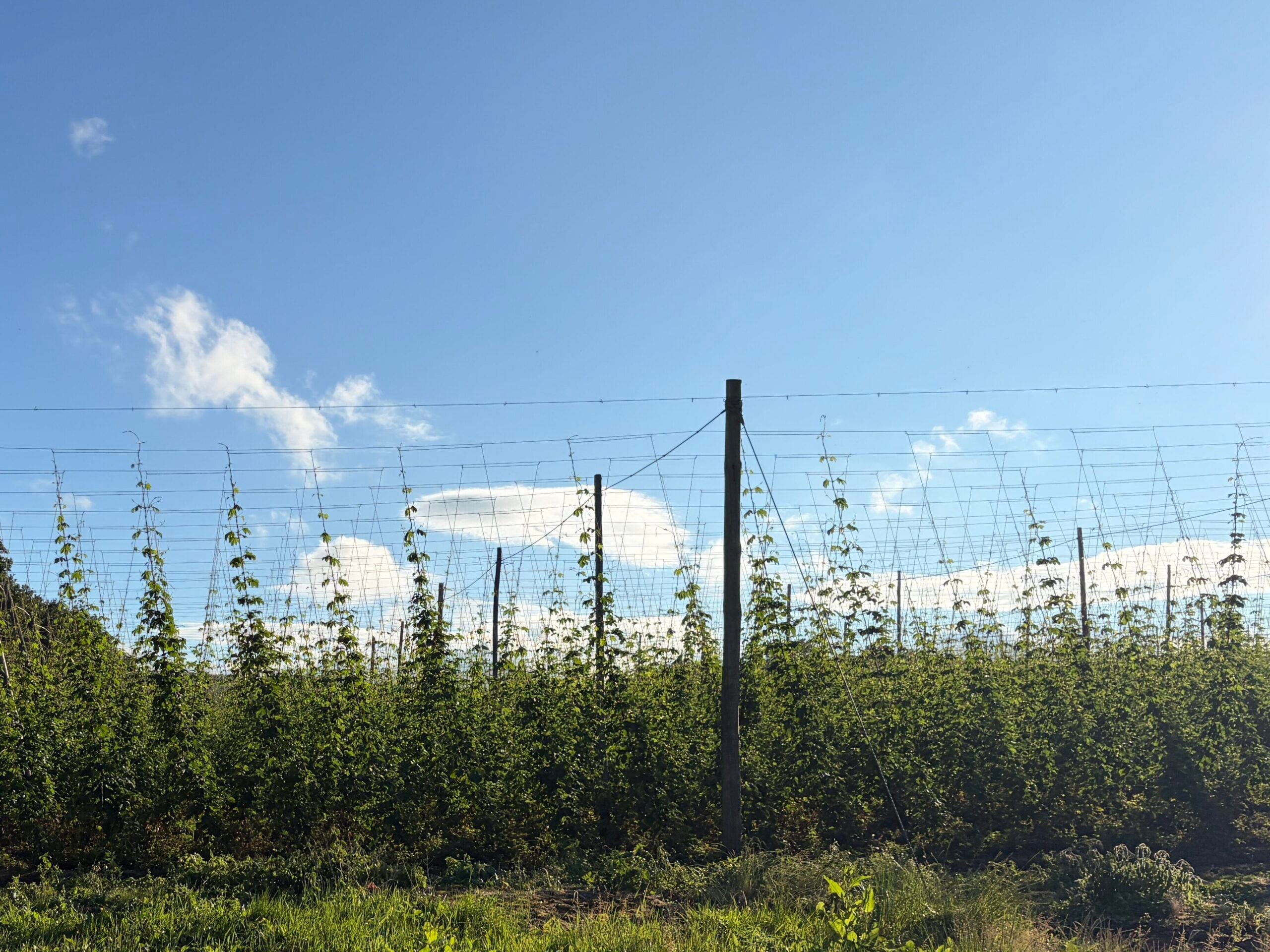
In farming, we are always watching the weather.
Sometimes, we are desperate for it to stop raining and sometimes, we are waiting for the clouds. After a dry start to the year, the weather continued to show no sign of rain. By the height of summer, we were experiencing one of the driest seasons we’ve ever experienced at Stocks Farm which meant watching our hops very closely.

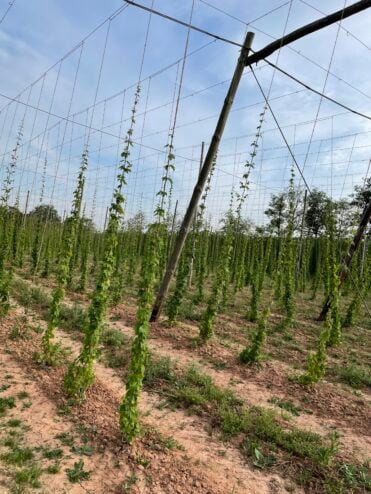

Just one of the extraordinary things about hops is just how much growing each plant does in a relatively short space of time.
Hops are perennial and emerge each spring. Once the shoots appear, we string every hop yard – usually in March and April. By May, the team have started going through the hops, training them clockwise around each string by hand. Once strung, they begin their climb.
Midsummer’s day is when we expect our hop plants to have reached the top wire as after that point, the day length means that the plants enter the next growing phase, sending out lateral growth. Our hops then come into burr and from there, the hop cones begin to form.
Hop bines can grow up to 10cm PER DAY. Unsurprisingly, all that growing requires water.
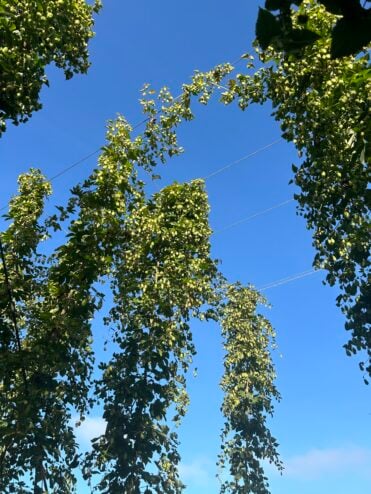
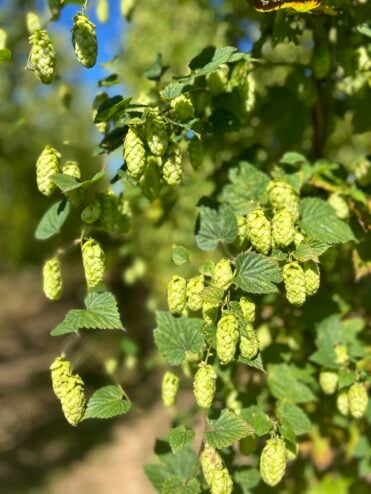
All our hop yards are clay-loam soil. This is hugely beneficial in a dry year as the clay retains moisture (not so good on a wet year!) We don’t irrigate our hops in a normal year, but it does mean that we pay very close attention when the soil begins to dry out. This year, we did use some additional water for some newly planted hops – this is because they don’t have the same established root structure to help them in a drought.
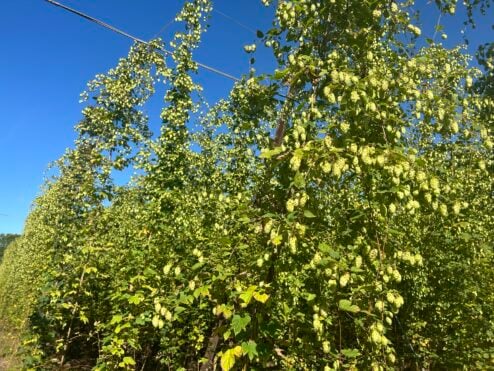
Our established hops coped by adapting to the change of conditions. Growth was slower than usual with fewer hop bines reaching the top of the wirework. They had shorter laterals, and the crop stayed towards the top of the bines, rather than “hopping down” the length of the bine. Leaves were also more spare on some of the later varieties, which can affect the crop when the cones don’t have the protection of the leaves. Luckily, the weather had changed with the later varieties and we avoided the worst sun damage.
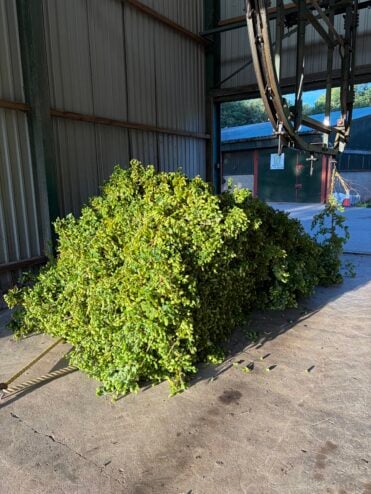
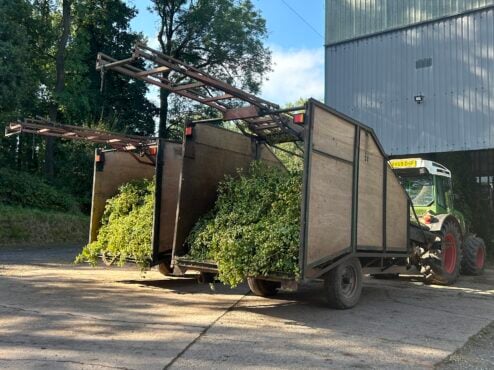
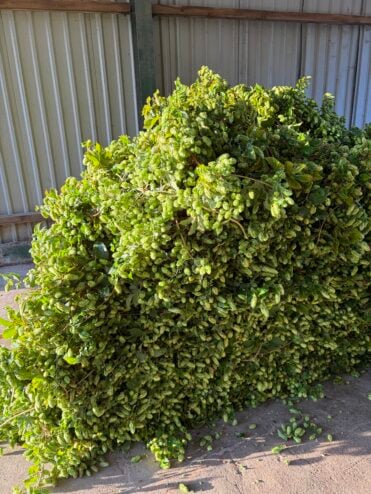
Different varieties respond differently depending on soil, position and the stage of growth they have reached. The earlier varieties looked better than the later ones but this might also be down to the age of the plants, not just the variety. There are so many different factors to consider with hop farming and even if you grow a hop using the same methods as the year before, nature can still produce a completely different result!
As we headed towards harvest, checking the plants became more important as we were not just looking at the hops, but also looking for signs of stress. becomes even more important when conditions are unusual. Despite the difficult conditions, the hops kept going, with a surprisingly good looking crop. There is something rather impressive about walking into a hopyard after weeks with barely any rain and still seeing green bines stretching overhead and hop cones forming amongst the leaves.
What does drought mean for the brewer?
The most obvious effect of a difficult growing season can be yield, but that’s not the most important part when it comes to the brewers. For them, it’s all about what happens after the harvest, and what the hops contain: aroma, oils and alpha acids.
Early reports are suggesting that whilst the crop is lighter than average, the quality is excellent, along with great alpha acids, which means fantastic beer!
To learn more about our 2026 harvest, click here.